Thursday, April 28, 2016

Why Your Sales and Marketing Stack Needs a Solid Foundation

Imagine the best pancakes you've ever had. What made them work? They likely started with a solid recipe of core ingredients, then added just the right blend of proprietary variations to make an unforgettable short stack. But it all started from a solid foundation – flour, eggs, whole milk, baking powder, salt, cooking fat, and sugar.


Your marketing and sales stack is no different. The foundation will make it or break it. Luckily, the ingredient list isn't nearly as long as the pancake mix.


What are the core ingredients that make up a solid sales and marketing foundation? It starts with a strategy focused on the customer and your content, and the right tool to whip it all together.


Constructing the Stack


The right recipe will help ensure you deliver the right message to the right person at the right point. An effective sales and marketing strategy starts with the customer and content at its core, and is further refined by understanding the journey that customer makes. Glossing over this part often results in half-baked strategies that fall flat.


It's critical to understand what the buyer's journey looks like – the stages of awareness, consideration and decision, and the transitions in between. Each phase or stage will be specific to your buyer, which means getting to know your buyer is imperative.


Enter: The buyer persona. These are detailed accounts of your target customer. They go well beyond basic demographics like age, gender, and occupation. A good buyer persona will detail what their motives and priorities are, how they determine success, what their perceived or actual barriers are, where they search for solutions, and who impacts their decisions.


While surveys and reviewing analytics from online behaviors can provide some level of insights, one-to-one interviews are the best way to gather in depth details. You can conduct phone interviews or in-person visits with existing customers, or use industry events and trade shows as opportunities to talk to prospects, current customers and even the customers of your competitors. You're looking for answers to questions such as:


  • What priorities/problems prompted them to search for a solution?

  • Why did they choose your brand over another? Or why didn't they?

  • How do they determine success and what are their goals?

  • What barriers (perceived or actual) might stand in the way of their decision?

  • Where do they look for solutions?

  • Who influences their decisions?


buyer-personas


In depth buyer insights are the bedrock of customer success-focused content.


With this level of detail, you are better equipped to understand and interpret their actions, and the questions they might ask within each stage on their path to purchase. At this point, the recipe will start to come together as you determine how to align your sales and marketing strategies to harmonize with the buyer's journey and be there with the relevant content they need to answer their questions or solve their problems.


Understanding the framework – the customer, their journey and the desired outcome of the content you produce – you will be able to identify what parts of the recipe can be changed as goals change or you learn more about buyer preferences. These three ingredients – the customer, their journey, and the content – will be staples, but how that content is delivered or the type being created can be substituted.


In-depth buyer personas and a map of the customer journey is almost like cheating the system. Marketing and sales teams armed with these are better equipped to make a calculated, winning recipe – serving up the right stack (authentic content), at just the right time and in the right place.


Serving Up the Stack


Now that you've got a solid foundational recipe in place, there's one final element – a solid platform to serve it from. Today, there's a near endless supply of sales and marketing tools to support with everything from automation to customer relationship management and sales enablement, but even the best stack of tools can become unstable without the right foundational platform.


Marketing-Tech-Stack


Just some of the tools that can be added to the marketing and sales tech stack. Without the right foundation, this stack can quickly become unstable.


How do you identify the right platform from which to build the recipe? First and foremost, it should support you in building a solid foundation. In other words, it should enable visibility into your customers, the purchase journey they go through, and the delivery of your content at the right place and time. Internal portals, analytics and collaboration amongst the various players on your team is also essential.
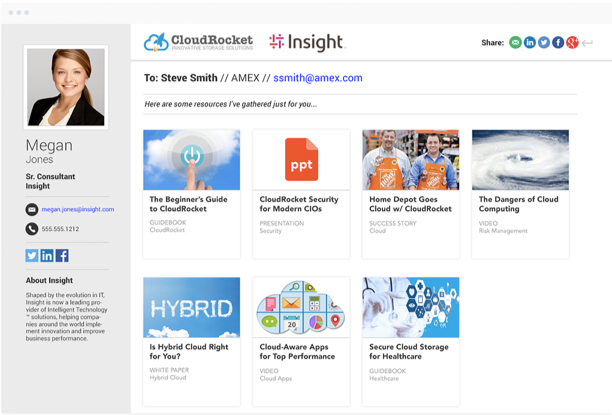

customer-insights


(Image Source) How much do you know about your customer? What they're reading, where they're reading it, what social channels they use, and what they do?


Try to avoid a cobbled together “Frankenstack” of sales and marketing tools. This creates silos within your team and makes for an unstable strategy that lacks cohesion. Instead look for a primary platform to serve as the hub. It should play nice with a variety of tools – everything should work in concert. Before you commit to a platform, consider the following:


  • What is our desired outcome?

  • Will this platform support our goals?

  • Does this platform integrate with the apps we need for our team to work seamlessly?

  • Does this platform help us fulfill the goals of our customer, and ultimately ensure they continue to move through the funnel?


If you are working with an indirect sales channel, that platform should also support them with the training, marketing and sales tools they need to do their job and nurture their customers.


Conclusion


Before you start throwing together sales and marketing recipes, be sure to understand the role of each of those core ingredients and how they can be used to direct all recipes that follow. This will enable you to create far more effective strategies rather than hoping something will work.


The customer and customer journey, and content that originates from those two ingredients, produces a winning recipe and helps ensure your efforts won't be lost in a sea of marketing messages.


About the Author: Jen Spencer is the Director of Sales and Marketing for Allbound, an innovative SaaS platform that helps companies empower their resellers and distributors to be more customer-focused through content and collaboration. Jen loves animals, technology, the arts, and really good Scotch. You can follow her on Twitter @jenspencer.


The Long Goodbye: 7 Sites That Make It Hard to Unsubscribe

featured-image-de-optimization-friction-650

De-optimizing your cancellation process: You can check out any time you'd like, but you can never leave.

Easy is better. Simplify every process. Reduce friction. Help visitors take action quickly. The easier the website or landing page is to use, the more profitable it will be.


But there are exceptions.


Some of your visitors want to act in ways that don't make money for your business. Some actions cause you to lose traffic, lose subscribers and lose money. Making these actions easier actually reduces profits.


These are the conversion rates you don't want to optimize:


  • Cancel service

  • Unsubscribe

  • Downgrade your account


Sometimes, it pays to be difficult - but not if you're sacrificing delightful user experience.


Here are seven de-optimized processes for ending subscriptions and cancelling service.


Are they profitable? Probably. Delightful? You be the judge.


1. Hidden help files: Cancelling Verizon


Verizon has a page about cancelling service, but people don't like it much. The average rating of 1000 users is one out of five stars. And Verizon doesn't seem to mind telling us this.


deoptimizing-opt-out-verizon-friction-example


The page is really about moving, changing or disconnecting service. But most likely, most visitors to this page aren't moving. They're trying to cancel.


But the page doesn't actually tell you how to do that.


If you want that information, you'll have to ask their automated agent, which is the robot head on the right. Here's what the robot will tell you…


deoptimizing-opt-out-verizon-friction-example2


That's right, you have to call. And this isn't a direct line - you'll have to wait as you're transferred. Make sure it's during business hours.


No wonder visitors gave this page one star.


2. Ending your free trial: Downgrading Hootsuite


I love Hootsuite. I use it all the time. I once tried their pro features, but after a few days, I decided it wasn't for me. So I decided to switch back to the free version. This began a very long process.


You start by going to “billing” which doesn't quite describe what I want to do, but close enough. Next, you'll need to look very closely to find the “change plan type” link.


It's the smallest text on the page. Gray on white text. See it?


deoptimizing-opt-out-hootsuite-friction-example

It's the tiny, tiny text under the “Current plan” header on the right.

Now you have three options. The least profitable option for Hootsuite is on the right. It's the least prominent, grayed out box. And the call to action doesn't sound very appealing: “Downgrade.”


deoptimizing-opt-out-hootsuite-friction-example2


Click, and now you've made them sad. There's a little owl crying somewhere at Hootsuite Headquarters.


But wait! There's a special offer. And it's free! But if you really want to break that owl's heart, there's another downgrade link at the bottom.


deoptimizing-opt-out-hootsuite-friction-example3


Now it gets real. There's a red x next to the specific feature that we'll lose if we downgrade. The specificity triggers loss aversion. And it's not just the feature, I'm going to lose points!


To proceed, we have to really commit and click “Remove Everything” which sounds like a more extreme action that I'd intended.


deoptimizing-opt-out-hootsuite-friction-example4


One more message box with a reminder of what I'm losing. This must be to make sure I hadn't clicked those last four tiny links by accident.


deoptimizing-opt-out-hootsuite-friction-example5


And finally, success! But it's not over yet. There's a continue button…


deoptimizing-opt-out-hootsuite-friction-example6


…which brings me to a survey. It's smart to remove every dead end from your website, right?


Why not take the opportunity to gather a little information? One question asks about the reason for downgrading. Clever.


deoptimizing-opt-out-hootsuite-friction-example7


It was a long road of seven clicks, not including the survey. But we made it.


3. A very long dead end: Cancelling cable


I couldn't find any information about cancelling cable on my local cable company's website, so I looked in the knowledge center.


Looks like “cancel service” is #1 on the list of top searches.


deoptimizing-opt-out-RCN-friction-example


If it's the top search, they must have a page on this topic, right? Let's try searching for the most popular keyphrase on this website:


deoptimizing-opt-out-RCN-friction-example2


Nope! There is no page about cancelling. But the top search result might be helpful. It's about “making a change.” Let's try that.


deoptimizing-opt-out-RCN-friction-example3

This “making a change” page, by the way, was at the top of the list of “hot topics” on the previous page.

This page doesn't actually mention cancelling, although that appears to be the main reason people are coming to this “knowledge center.”


It's a dead end with a phone number at the top.


You know what happens next. It's a 30 minute phone call to an operator who first offers you a lower rate. Eventually, you learn that you can cancel, but you have to bring your cable box back to their office first. They are open from 10am to 3pm Monday through Thursday.


The final step? Get in the car and drive several miles to the cable company to return the cable box. How's that for user friction?


deoptimizing-opt-out-RCN-friction-example4


4. Instant regret: Opting out of a political newsletter


I'm on a lot of lists. Some of them are fundraising lists for political causes. These people send a lot of email, and although I might support the cause, enough is enough. Time to unsub.


Here's the opt-out “thank you” page for a left-leaning campaign finance reform movement:


deoptimizing-opt-out-end-citizens-united-friction-example


Oh no! Because of me, the bad guys won!


The regret trigger is accompanied by an offer to resubscribe. It's tempting.


5. Opt-out? Or update? Another unsubscribe process


Here is an unsubscribe page that doesn't use the word unsubscribe.


It's an offer to select from a list of newsletters with one option: “special subscription offers.” It looks exactly like a signup page.


deoptimizing-opt-out-crains-friction-example


Of course, you came to this page because you're trying to stop receiving those offers. But there is no option to unsubscribe, only an option to update preferences. You unsubscribe by unchecking the “yes” box.


If this newsletter was a relationship, you wouldn't be breaking up, you'd be declining the first date.


6. Cancelling premium service: Cutting ties with Spotify


Here's another break up story that will leave you in tears. Spotify is a great service, but if you upgraded to the premium version through iTunes, you're in a relationship that's hard to get out of. By the time you're done, you'll need some counselling.


Imaging you're trying to cancel Spotify Premium. You go to your account page. Now what do you click on?


deoptimizing-opt-out-spotify-friction-example1


The correct answer is “Subscription” which makes sense.


Step two in the process has a simple, clear link for cancelling:


deoptimizing-opt-out-spotify-friction-example2


Great. Let's click that…


deoptimizing-opt-out-spotify-friction-example3


We've hit a dead end. It's a notification telling us that we need to go to iTunes to cancel. You can't cancel Spotify from within Spotify.


So we head over to iTunes, and of course, we start at the beginning. As before, we'll go to “Account Info.”


deoptimizing-opt-out-spotify-friction-example4


Even though we're already logged in, we need to log in again…


deoptimizing-opt-out-spotify-friction-example5


At the bottom of this page is a small “Subscriptions” label. To the right of it is a “Manage” link. Let's try that. This was step seven in the process. But who's counting?


deoptimizing-opt-out-spotify-friction-example6


Found it! This is where your Spotify subscription is managed. But where's the cancel option? There isn't one. But we can turn off “Automatic Renewal.”


deoptimizing-opt-out-spotify-friction-example7


Next up: a confirmation message. But this doesn't actually cancel anything, it just lets it expire sometime within the next month.


deoptimizing-opt-out-spotify-friction-example8


I've endured this long process not because I don't want Spotify, but because I need to cancel premium so I can sign up for the family plan. So I really don't want to wait a month. Isn't there a way to cancel now? Let's chat with the support team.


deoptimizing-opt-out-spotify-friction-example9

In the end, you actually can't cancel. You can only turn off automatic renewal and then wait.


So the last step in this nine step in the process? Wait a month.


7. The endless funnel: The long road away from Audible


We've seen tough-to-quit services, hidden opt-outs, and post-cancellation surveys. Here's one final breakup service that combines them all into a masterpiece of deoptimization.


It's Audible.


Rather than having to purchase audiobooks, they sell a subscription to an endless stream of audiobooks. If you don't use them, the credits pile up. Eventually, you'll wonder why you're paying that monthly fee.


Let's see what it takes to cancel.


First, we go to our account details page. There are a lot of options here, including one clearly marked “Cancel my membership.”


deoptimizing-opt-out-audible-friction-example

On the left, in the middle box.

Although we just told the site we want to cancel, we're presented with benefits and selling points.


Where's the cancel option?


deoptimizing-opt-out-audible-friction-example2


Scroll down. It's below the fold.


deoptimizing-opt-out-audible-friction-example3


Before we proceed, we need to name our reason.


This is a smart way for them to force the data collection. So we'll pick an option and click “Continue.”


deoptimizing-opt-out-audible-friction-example4


After selecting that we're taken here:


deoptimizing-opt-out-audible-example-5


Wait - we wanted to cancel, but the highlighted option here is to put the account “on hold!”


The “Continue Canceling” button is here but it's less prominent. The site is saying, “Let's not break up. Let's just take a break for a while.”


But determined to move on, we continue.


Next we land on an offer to keep our account at a lower cost. Rather than $180 per year, the price is reduced to $10:


deoptimizing-opt-out-audible-friction-example6


But stay focused! We click “Continue Canceling.”


One last pitch to talk through things on the phone:


deoptimizing-opt-out-audible-friction-example7


Or finish our (eighth?) step and click “Finish Canceling.”


We made it. Here, finally, is the confirmation page:


deoptimizing-opt-out-audible-friction-example8


But of course, this isn't goodbye. We are told that although we've cancelled, we are “still a valued customer.” Once a customer, always a customer.


And the site wants to have one last conversation: Select a rating or leave additional comments.


The last screen? A list of reasons to renew.


Make that remorse disappear by choosing a plan and running back into the arms of Audible:


deoptimizing-opt-out-audible-friction-example9


Of course, there's a confirmation email, which is another chance for reconciliation - back at the site, through email or over the phone.


deoptimizing-opt-out-audible-friction-example10


And although we've cancelled, we're still subscribed. Minutes later we get another email, offering us a free book.


It's just a click away!


deoptimizing-opt-out-audible-friction-example11


Remember, that one-click relapse is easy, but to get clean again, you'll need to go back through that 12-step program.


It all reminds me of that lyric from the Eagles song Hotel California.


You can checkout any time you'd like. But you can never leave…


This is not marketing advice


Marketing is about promoting a product or service. It's about showing prospects that you understand their pain points and that you've got a tailored solution.


What you've witnessed here is entrapment. The goal is to retain customers at any cost. So before you consider these tactics, ask yourself:


  • If we keep them, will they still be happy?

  • Will there be a backlash against us?

  • Do these tactics violate our brand values?

  • How far are we willing to go to keep a customer?


Great websites are empathetic. They care, they help and they work with the visitor for mutual success.


How a GREAT Marketer Befriends an Influencer

great-marketer-influencer


Have you ever watched a reality competition? You know, one of those Survivor-style shows that puts strangers in a stressful situation to battle for a last-person-standing prize?


Don't be ashamed if you have. I'm a pop culture snob, but still found myself transfixed by ten seasons of America's Next Top Model. On that show, amidst the freak-outs and tantrums, I noticed one recurring line of dialogue:


“I'm not here to make friends.”


You'll hear it on almost every reality competition. There's always one person who alienates everyone else with that specific phrase. Usually it's followed by, “I'm here to win.”


The funny thing is, in all the hours I wisely invested watching would-be models snipe at each other, no one who said that ever won. Not once. In fact, they tended to get kicked off earlier than anyone else.


It's easy for marketers to feel like we're not here to make friends. Even in influencer marketing, it's all about that ROI. Influencer, you get me what I need, we'll compensate you, and that's the end of it. We're here to win.


But just like the models and aspiring pop idols of the world, you'll find that putting effort into building friendships pays off in the end. If you want influencers who are excited about working with you, creating work they're excited to promote, it pays to cultivate a friendship. Not just from a, “it's nicer to work with people when you're nice” angle, either-it's better for the business side, too.


Here are three ways you can cultivate friendships with your influencers.


#1 – Consider People outside of their Interaction with Your Business


This is a piece of advice I've given to marketers thinking about their customers, but it applies to influencers as well. Yes, you're vetting the influencer for the size of their audience and if their audience aligns with your message. But while you're doing that, consider what they do when they're not answering your email.


What are they like? Do they have a good sense of humor? What are their hobbies? Do they talk about their family, their pets, their collection of vintage chainsaws? What kind of music are they into? What movies do they love? It's worth doing a little digging to find out. And I don't mean just social media stalking, either. These questions can start a conversation you might not have had otherwise. We all love talking about ourselves-give them a chance to share interests you might have in common.


#2 – Take – Don't Fake – A Personal Interest


Last December, I got a greeting card in the mail. It had my name and addresses hand-written on the envelope, but no return address. Intrigued, I opened it to read: “Best holiday wishes to you and yours from your friends at [Insurance Company].” I looked at the envelope again, and this time could tell their hand-written address was just a handwriting font. Just like that, any illusion of personal interest they were trying to create was gone.


With your influencers, it's worth taking time to express a genuine personal interest. Let your correspondence show that you have taken time to learn something about them. Send a meme that made you laugh, that you know they would love. Send them a vintage chainsaw to add to their collection. That thoughtfulness goes a long way.


Just make sure you do your homework under point #1, so you're not faking the funk. You wouldn't want to send chocolates to a diabetic, or a vintage chainsaw to someone who collects old Happy Meal toys. That's just a waste of a good chainsaw.


#3 – Strive for Genuine, Enthusiastic Co-Creation


At TopRank, we try to involve influencers in the creation process as actively as possible. We make sure influencers know exactly what project we're working on, why we would love their input, and which other influencers are already on board. We keep the enthusiasm up throughout the process with progress reports. We show them the finished project before we publish it so they can make final edits. And we always make sure to message them right before the project posts, to make it easy for them to promote it.


Compare that approach to simply saying, “Hey, can we get a quote about Happy Meal toys for a blog,” followed by…well, no follow-up at all. There's no comparison.


How a GREAT Marketer Befriends an Influencer


Let's face it: We are here to make friends. In marketing, as in life, friends make good things even better. So to help you cultivate lasting friendships with the influencers in your life, we created this cute-but-serious storybook with some key points to keep in mind. Read it to your kids before bed tonight…or to your significant other while you're binge-watching America's Next Top Model.


Email Newsletter
Gain a competitive advantage by subscribing to the
TopRank® Online Marketing Newsletter.


© Online Marketing Blog - TopRank®, 2016. |
How a GREAT Marketer Befriends an Influencer | http://www.toprankblog.com

The post How a GREAT Marketer Befriends an Influencer appeared first on Online Marketing Blog - TopRank®.