Thursday, January 28, 2016

5 Ways to Jumpstart your Marketing Strategy in 2016

5 Ways to Jumpstart your Marketing Strategy in 2016 written by Guest Post read more at Duct Tape Marketing


marketing strategy

photo credit: Dollar Photo Club


It’s resolution time:


  • You’ve already been to the gym this morning

  • You haven’t eaten anything bad for you (but tastes so good!) in at least 24 hours

  • You’re actively thinking about your Marketing Strategy right now


Great!  Let’s build on that last one (I have a hard enough time with the other two myself…)


The New Year brings about a fervent desire to be better and do better. Directing these desires towards your business is always at the top of the list for small business owners.  But where to start?  So here are five tips that will help you create an effective marketing strategy for your business.


The good news is – a couple of hours of dedicated “think time” this week is all you need to get these down (write them down!) and then get to work – Resolution Kept!


1. Know your business’s goals


Ask yourself where you want the business to go. You know the answer here better than anyone – after all, the business is a reflection of you.  What can you really achieve this year?  What could you achieve through a focused, purposeful approach to growing your business this year?  How will you communicate this and hold everyone (including you) accountable for achieving these goals?  Keep them S.M.A.R.T. – Specific, Measurable, Attainable, Realistic and Timely.


2. Identify your ideal target customers


Understanding whom you are selling to (and who you aren’t) is critically important because it can save you a lot of time and energy. Let’s look at the example of a dental clinic. The target base for that business is not every single person who needs a dentist. Instead, it is the people who need a dentist with ready access to the clinic and have a specific need for a service you’re uniquely qualified to provide (e.g., implants or cosmetic dentistry). Firing unprofitable customers and not targeting unprofitable prospects is an important part of your marketing strategy.  Think about whom your 10 best customers are and what you need to do to attract 10 more just like them!


3.  Identify what the business is selling and what customers are really buying


Whatever your business is selling must be in line with your business values and goals. Sometimes this answer isn’t as clear as you might think. For example, if you own a dental clinic, the easy answer is you are selling dental care. However, you might also be selling some other things without realizing it. Ask your customers why they choose to do business with you. They might mention things like comfort or simplicity or convenience. For example, people like to go to clinics where they feel good about the experience more so than just the practical matter of dental care.  Ask your best customers what they like most about doing business with you and why they keep doing business with you – the answers may surprise you and will get to the core of your reputation, which can be a unique competitive advantage for your business.


4. Look at the Competition


Looking at your competition can be incredibly motivating. It can also help you identify where your business is going wrong (or on the flip side, what it is excelling). Consider the ways in which your customer base, products/services, and goals compare to your competitors. Set Google Alerts for each of your competitors (or use a service like BuzzSumo) to help monitor what they are saying and doing and then consider how this could impact your marketing strategies.  Do not assume that just because they are doing something different that they are better – keep in mind who you’re targeting and view your research in light of your strategies.


5. Understand the Necessary Investments


Creating and executing your marketing strategy is a matter of time and money. You should budget for both of these things. It is very important to have a marketing strategy, but you also have to consider implementation.  Do It Yourself Marketing is certainly a viable option, but also consider if partnering with a marketing expert for planning and execution while you run your business would be a faster path to success.  While there are dozens (if not hundreds) of ways you can promote your business to your target market, choosing a path and then adjusting as results come in can be a time-consuming process that an outside expert can handle more smoothly.


With a couple of hours this week spent thinking through these five steps and putting a plan in place you can begin to deliver exciting growth for your business and stay on the path to profits that will outpace your competition.  Happy New Year!  


Bonus Tip: Block time (and follow through) on monitoring your strategy and plans each week (or at least every other week) throughout the year.  If you’re dedicated to growing your business I can assure you that focused attention on your Marketing plan will be an area where your competition will give up long before you do – opening the door to growth.


Screen Shot 2016-01-08 at 11.30.05 AMMark Z. Fortune, founder of Fortune Marketing, LLC, advises small businesses on marketing strategies to ensure that sales and marketing investments return positive results. Mark is a Master Duct Tape Marketing Consultant who believes small business marketing challenges are not insurmountable; they can be met with a focused approach leveraging the principles of the Duct Tape Marketing System. He is also a co-author of the recent Amazon Bestseller The Small Business Owner’s Guide to Local Lead Generation. More information is available at www.fortunemarketinginc.com and www.localleadgenbook.com


3 Examples of Brands Using Podcasts to Increase Sales, Offer Value & Build Audiences

MIMA Event Podcasting


[Note From Ashley: TopRank Marketing team members Debbie Friez and Joel Carlson recently attended a Minnesota Interactive Marketing Association (MIMA) event in Minneapolis and collaborated to bring you the insights below from the event.]


Long gone are the leisurely evenings and weekends where people disconnected from the outside world and made time to relax. Today’s consumers are ALWAYS connected and constantly consuming information from a variety of sources.


The question for marketers is: how can you capture the attention of your audience while they’re on the go and multi-tasking constantly? One of the solutions that has surfaced in recent years is incorporating podcasts into your digital marketing mix.


Below we’ll dive in to three case studies MIMA social broadcasting event that uncover how different brands are working podcasts into their marketing strategy.


First, Why a Podcast?


  • Mobility is key. You can listen on the go in your car or the train.

  • It’s personal. The information can be directed at the consumer.

  • Drives Engagement. Podcast subscribers can be the core of a community who move to other key assets and channels.


Insights for Busy Salespeople


Busy salespeople don’t have time to read a newsletter or possibly an email. This was the dilemma for the Medicare and Retirement division of United Health Group. They wanted to share tools and ideas with their sales agents during enrollment period.


Within the healthcare industry, communication is heavily regulated which means there are lots of things that they can’t do or say. Kendra Klemme, Associate Director of Communications, United Health Group, says everything has to be cleared through lawyers. So the question comes up, “How do we work within this system?” and still accomplish what we need to get done.


Once cleared by the lawyers, the communications team decided a podcast was the right route to take for communicating with sales, and production happened quite quickly. The focus of the podcast was on providing the sales team with information to help them improve their approach and results. The key was providing a method for getting the sellers excited to start fast out of the gate during enrollment period.


Early podcasts were produced to be anywhere between 10-15 minutes in length, making them easy to listen to for sales people in between their customer visits. From the initial podcasts that were done in 2015, UHG received positive feedback from sales leaders and agents, having reached 7K+ listens overall.


Moving forward for 2016, the plan is to produce two podcasts per month – one on highlights from the monthly eNewletter, lasting anywhere from 3-5 minutes and another longer one on areas of interest to their audience.


What UHG learned from producing podcasts:


  1. Continue to refine the topics

  2. Work to promote the podcasts in multiple ways

  3. Leverage the leadership

  4. Bring the sales agents into the mix and harness some of that information. Provide best practices.

  5. Look to create additional touchpoints.

  6. Move forward with a heavier focus on LinkedIn


Information for the Modern Farmer


If you grew up on a farm, you know that harvest season is CRAZY BUSY! Despite that fact, the Mosaic company wanted to talk to farmers during harvest about raising yields.


On today’s modern farms, you will find farmers checking social media and listening to all kinds of media while they bring in the crops. In order to capture that audience, they wanted to create a podcast around “A Prairie Home Companion” meets “Twin Peaks” meets “Serial”.


The result was “The Great Yield Mystery”, a 10 episode audio drama, which included a website, gamification, prizes and a trailer poster. And the result gave their existing audience something they could use.


The podcast had a longer tail than they expected and exceeded interaction goals by 379%.


A Taste of General Mills


Kevin Hunt, Social Media Manager, General Mills, and an experienced podcaster provided insights into “A Taste of General Mills”, a brand website for consumers. He shared that General Mills wanted to provide a deeper look into their brand through an interview style podcast hosted on the website and modeled after “This American Life”. (Clearly NPR is winning in the podcast idea segment!)


The first podcast produced featured the creator of Cheerios. Recorded during a commercial shoot, it provided a behind the scenes perspective. This was followed by podcasts covering their monster cereals, celebrating 50 years of the Pillsbury Dough Boy, focusing on a cookbook editor and interviewing people with cooking fails, and then celebrating the 150th anniversary of General Mills. In February of 2016, the podcast will be quite topical by focusing on Super Bowl appetizers.


Kevin emphasized the need to make a plan for setting-up interviews, recording, scripting, and promotion. Their posting strategy includes iTunes and SoundCloud for searchability. General Mills doesn’t make a separate show page for the podcasts, but instead includes it as a part of the blog.


Audience growth takes time, so promotion is key. General Mills creates special graphics for promoting on their social channels. They also email subscribers of the blog.


Does Podcasting Have a Place in Your Marketing Strategy?


Podcasting in both video and purely audio forms has become an increasingly popular digital marketing tactic. Before venturing out on a podcasting endeavor, consider the following:


  • Would a podcast from your brand create value for your busy audience?

  • How would it fit into your content mix?

  • What format and length would be the best fit for your audience?


We’d love to hear your thoughts.


Email Newsletter
Gain a competitive advantage by subscribing to the
TopRank® Online Marketing Newsletter.


© Online Marketing Blog - TopRank®, 2016. |
3 Examples of Brands Using Podcasts to Increase Sales, Offer Value & Build Audiences | http://www.toprankblog.com

The post 3 Examples of Brands Using Podcasts to Increase Sales, Offer Value & Build Audiences appeared first on Online Marketing Blog - TopRank®.


8 Steps to Guarantee Marketing Automation Success

EmailMonday gathered an impressive list of statistics about marketing automation usage and its relevance for businesses in 2016 and beyond. Some key statistics from various sources include:


• 91% of the most successful users agree that marketing automation is very important to marketing success across all channels (Ascend2).


• Approximately 11 times more B2B organizations are now using marketing automation compared to those in 2011 (SiriusDecisions).


• Best-in-Class companies are 67% more likely to use marketing automation (Aberdeen Group).


• 79% of top-performing companies have been using marketing automation for more than two years (Gleanster Research).


• 42% of CRM users will increase marketing automation spending in the near future (Software Advice).


• 54% of CMOs have started or finished marketing automation software implementation (MarketingSherpa).


• The most commonly used marketing automation applications include email marketing software, CRM, and marketing automation suites (Software Advice and Research Now).


• In the B2B environment, 69% have used marketing automation for customer acquisition while 50% have used it for customer retention (ACT-ON and Gleanster Research).


As noted by other research, leveraging available automated processes for marketing can add efficiencies, fill in talent gaps, maximize limited budgets, and more effectively target those platforms and channels were customers and prospects are now located. In determining the process for adding marketing automation to your SMB, there are some best practices that you will want to consider before you dive in:


1. Review what you are using now before changing anything.


Like most companies, you are most likely using a wide range of offline and online tools, having added certain marketing tools as they have been introduced while still keeping old traditional software. You need to know what you have in order to determine what type of marketing automation you can employ that brings it all together and removes any duplication of effort and helps you have more time for other aspects of your business.


2. Research available marketing automation solutions.


In order to know what you want to automate and what this solution will do for you, it’s important to study the existing solutions. Whether you implement the marketing automation solution or you hire someone to do it, you need to understand why it works for your business. This can help with future strategic decisions related to your marketing effort and other technology investments.


3. Organize existing data to prepare for automation.


Automating with a mass of unorganized data definitely defeats the purpose, so you need to spring clean your data. This means getting rid of duplicate and inaccurate information before transitioning from multiple systems to just one.


4. Map out your transition to an automated marketing process.


You may even want to consult with a marketing professional who can suggest a specific way to approach the transition as well as the best automated marketing solutions for your business niche and specific strategy. Typically, you will want to have a centralized marketing database, an engagement engine, and an analytics engine as part of your new automated marketing solution.


5. Align the automated marketing processes with the sales processes.


It's critical to get your sales team included in the marketing automation process. They will most likely have insights about the type of automated system that would work best for what they are trying to achieve. This alignment can further your ability to qualify leads and turn them into customers.


6. Create a timeline for the marketing automation transition.


A best practice is to take a stepwise approach to automating your marketing processes. The last thing you want to do is change everything at once. If anything goes wrong along the way, you could end up losing customers and traction. By automating specific aspects of your marketing at one time over the course of six months to a year, you are ensuring everything integrates and is seamless to the customer and prospect.


7. Train your staff to use the new marketing automation solution.


Ensure that they know how and why this marketing automation solution works for your organization. Even though it is automated, your staff still needs to know what it is doing and what the results mean. After all, overusing the automation can backfire so they need to know the frequency and quality of the messages they are adding to the solution. There are still decisions to be made about marketing content used for the automated processes like email marketing and campaigns plus analytics to analyze and changes to make based on the results from these metrics.


8. Continually review results from the marketing automation effort.


Your marketing automation processes do not operate in a vacuum. It’s critical that you continue to monitor them and assess the results you get from the investment. The analytics you get from the effort will guide you toward any changes that need to be made and will serve as the benchmark for the type of technology or tools you add in the future.


This is the year for your business to transition to marketing automation to ensure the greatest efficiency and return on your marketing investment. By following these best practices, you can increase the results gained by automating your marketing processes.


This comprehensive guide to Marketing Automation will start your journey down the road of marketing automation success.


Author Bio: John Rampton is an entrepreneur, investor, online marketing guru and startup enthusiast. He is founder of the online invoicing company Due. He was recently named #3 on Top 50 Online Influencers in the World by Entrepreneur Magazine and has been one of the Top 10 Most Influential PPC Experts in the World for the past three years.


Hundreds Of Local Movie Theaters Will Soon Become Beacon Hot Spots

Beacon network Mobiquity and theater advertiser Screenvision team up to bring mobile marketing to U.S. moviegoers.


Please visit Marketing Land for the full article.


Discover the Power of the “Only-Factor” to Drive Conversion


According to the CMO Council, digital ads will lead the way for global media growth in the next two years, accounting for 33% of total advertising revenue and growing from $133 billion to $194.5 billion. This month’s MarketingExperiments Web clinic examined how to make the most of this increasing digital investment by focusing on the “Only-Factor” — the point of your value proposition where your product’s exclusivity and appeal meet.


Check it out here.


The two experiments below illustrate the power of the “Only-Factor.”


In the first experiment, a credit card company wanted to see which PPC ad would produce the most applications.


Version A promoted its affiliation with a popular organization.


Version B noted that it offered the only credit card that supported this particular organization.


The result: Exclusivity matters. 2.34% clicked to apply for their credit card from Version A while 4.07% clicked to apply from Version B. This is a 74% lift that was validated at a 95% level of confidence.


In the second experiment, a software company wanted to drive more visitors to its landing page.


Version A specifically outlined how its product stands apart (number of clients served, worldwide market leader, award-winning). 


Version B mentioned awards, but was far less specific.


The results indicated that specificity converts. Version A reported 1.08% clickthrough while Version B had only .89% clickthrough — a relative difference of 22% that was validated at a 95% level of confidence.


Want an instant test to measure how strong your “Only-Factor” is in your online advertising? Replace your brand’s name with a competitor’s in your online advertising. If the ad still works, you have work to do. You also have work to do if you’re offering exclusive benefits that your market place is ho-hum about.


Exploit your “Only-Factor” by creating and communicating a powerful value proposition: why customers should buy from you rather than anyone else.  The heuristic below illustrates the concept. 


When you subtract the cost force (Cf — the perceived cost of taking an action, like buying your product), from the Value Force (Vf — the perceived value of what you’re offering), you will get the net force (Nf). The higher the net force, the higher your conversions. Value force is made up of appeal (Ap) and exclusivity (Ex). Therefore, the higher your exclusive appeal, the higher your value force. So, to achieve the most conversions, you want the highest appeal and exclusivity possible. That’s the “Only-Factor. ”


To identify and communicate your strongest value force and the “Only-Factor” that comes with it, you’ll want to download and fill out the free value proposition worksheet here. This isn’t a solo activity; involve as many of your colleagues in as many departments as possible. You may even want to talk to your customers as well to attain the most accurate perceptions. It will be well worth the time invested as you’ll have the knowledge you need to pinpoint your "Only-Factor" and use it to drive more conversions.


You might also like


How to Avoid Losing the Value of Your Value Proposition


Value Proposition: How do you create an effective value prop?


Value Proposition: A simple spreadsheet to help you categorize your products’ value


Discovering Your Value Proposition: 6 ways to stand out in a crowded marketplace [MarketingExperiments Web clinic replay]


Sign up for the MECLABS Value Proposition online course [MECLABS is MarketingExperiments' parent research company]


The Five-Step Process for Writing Powerful Call-to-Actions By Reverse-Engineering Customer Mindsets

For me, growth hacking is more than just a mindset. It’s about the desire to take tradition and flip it on its head. It’s about leveraging the way we’ve always done things and manipulating those processes to achieve a much better result. It’s about the various interpretations of data and the creative inspiration we draw from them to solve problems and create opportunities.


If you’re growing a product or a startup, you’re probably already aware of the importance of testing which calls-to-action drive the most adoption. Without supplying a nudge for a user to take action, you might get no traction at all, even though your offering may be outstanding.


A call-to-action is the final frontier, separating the discovery of your product’s value proposition and the actual journey a user will take to experience it. It’s like the starter’s gun on track day. After you have attracted users (i.e., runners) who have found the start line, then you need to motivate them to run the journey to the finish line (being a point at which your business objectives are met, such as making a sale, hopefully repeatedly).


Where to begin, though? You could start with the usual “buy now” or “start today” and keep A/B testing to find the most frictionless point of entry. But that approach, even though it may be effective, assumes what you’ve seen elsewhere is “best practice” and therefore should work.


What if you had a starting point so powerful it was almost an unfair advantage? Enter the psych-dive.


How Did This Come About?


I sat down with a psychologist friend of mine the other day, and after all the pleasantries were exchanged, we got to talking about product growth and human behavior. While I’m sure most psychologists are used to putting people on the spot, it was an interesting sight to see how uncomfortable I made him with the question I posed.


I asked something along the lines of: “Michael (name changed to protect his professional integrity), you deal with people and data sets all the time, and you know all about psychological profiling and making educated assumptions in order to help people overcome compulsions, right?”


“Yes,” he nervously replied.


That was my green light. “What would you need to do to turn the tables? To use profiling and data-driven stereotyping to amplify a compulsion?”


He paused, conflicted, partially by the thought of flipping his power for doing good on its head and partially by the surprise of such a request.


What followed was a discussion of the process one could use to profile, generalize, and deconstruct marketers’ tendencies to create more impulsive calls-to-action.


Flipping the Way a Psychologist Cures Compulsion


The main building blocks for the way a psychologist helps someone out of their compulsive need to do something include the following: helping them understand themselves, their habits, and their psychological needs and helping them understand how they use an addiction to fill those needs in an unhealthy way. A psychologist then helps them find new, healthier ways to address those needs (like using exercise to feel better instead of drugs).


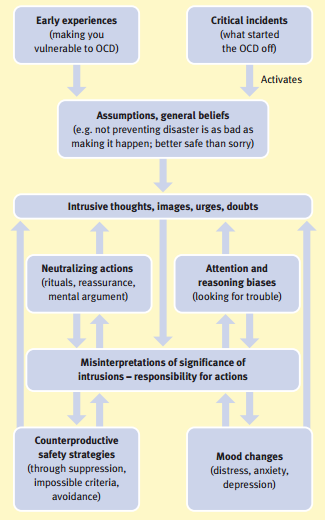
ocd-cognitive-modeling


Cognitive Modeling of Obsessive-Compulsive Disorder (Source Paul M Salkovskis, Elsevier)


Theoretically, to reverse-engineer that process and increase the likelihood that someone would become compulsive around a product, you would do the opposite. You would try to keep them from being aware of themselves and their habits. You would keep them out of touch with themselves, and encourage them to use an easy, quick-fix solution.


This is already happening in real life. People use Facebook unconsciously. Users have never made an active decision to start spending a lot of their time online looking at other people's posts and photos. It just happens.


People rarely say they LOVE Facebook, or that Farmville is the BEST. They probably say something like, “I waste waaay too much time on Facebook” or “I spend sooo much money on my farm.” This compulsive relationship, albeit seemingly invasive, is a sign the user has been drawn in to the experience and is there to stay.


Ethically, there also are a lot of questions to answer here. Yes, your business needs to make money. That's the bottom line. However, at the same time, each person and business has some decisions to make about "how bad" something is. Most of us wouldn't rob people at gunpoint even if it was rather profitable, because that's just wrong. But most of us wouldn't feel too bad about selling chocolate cakes, even though chocolate cakes are technically bad for people.


Somewhere on that scale is a place where it starts to get a little gray. Is it unethical to deal drugs to poor people who can't afford them? Or, are they the ones who decide to buy the drugs and you're just providing a service? In other words, how comfortable are you with your business model and the extent to which you encourage/market/manipulate people into wanting your product?


With that said, here’s how to immerse yourself in the deep workings of your target audience for better calls-to-action.


Psych-Dive Analysis for Better CTA Triggers


Different segments of society are compulsive in different ways. You have an aging demographic that was brought up in the era of glorification of cigarettes and alcohol (before cigarette companies started to pay out compensation for smoking-related impairments), just like you have a sector of the technologically-native young adults who take to Snapchat and Candy Crush as if they were the only things keeping them interested in life.


Here are four steps for how to uncover compulsions in your key target audience and craft better calls-to-action from the get-go.


Step 1: Craft a Survey


To craft brilliantly effective calls-to-action laced with compulsion, you need to get a solid idea of how your typical market segment thinks and acts with other things generally considered compulsive behavior. These types of assumptions are easy to guess, especially if you classify yourself as similar to the very users you’re trying to target. But, like most assumptions, it’s easy to get it wrong.


Clarity around how your users become compulsive can only be achieved with research. If someone else has already done the hard work and you find your answers via a research piece on Google, then great. But, chances are, what has worked for someone else might not work for you. If, like 99% of scenarios, existing data just doesn’t cut it, you need to take charge and source these answers yourself.


The most effective (albeit, most annoying to respondents) method is a survey. It’s important to be concise if you intend to get a decent rate of response. I always try to keep my questionnaires to a maximum of 10 questions, and largely base these around behaviors. Behavioral questions are some of the most powerful insights into your target market because they unlock answers about how the user’s mind operates. I also ensure absolute anonymity to increase the likelihood of natural responses.


Questions you ask here should serve the purpose of unlocking insights into the behavior of your target audience. These are questions that, once collated to create an overall persona, tell you exactly what motivates their actions.


With limited bandwidth, each question in your survey needs to count. So how do you decide what to ask? Humans, regardless of demography or psychography, always “want” something. Generally those things include elements of personal, social, and career life. Here are three things to consider when formulating questions for your survey:


Biological Compulsion


It’s easy to understand and relate to biological urges to eat and sleep. Questions that relate to demand-based acquisition of biological needs and desires that truly make us “human” can unlock a lot about what intrinsically motivates a user. Biological compulsions cannot really be switched off, and they drive our very existence.


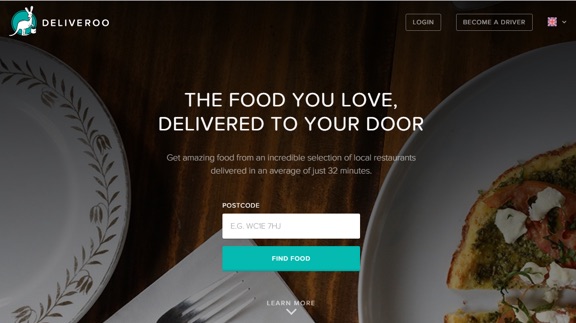
deliveroo-cta


Primal instinct at its finest. Deliveroo’s “Find Food” call-to-action says it like it is.


Experimental and Social Compulsion


Another great avenue for discovering compulsion is to explore things like relationships, social interactions, and drug and alcohol use. These types of insights can tell you if a user relies on external influences to trigger a decision. A great CTA in this instance would be something like “Join your friends” or “Let’s socialize” because these tap into urges to be “connected.”


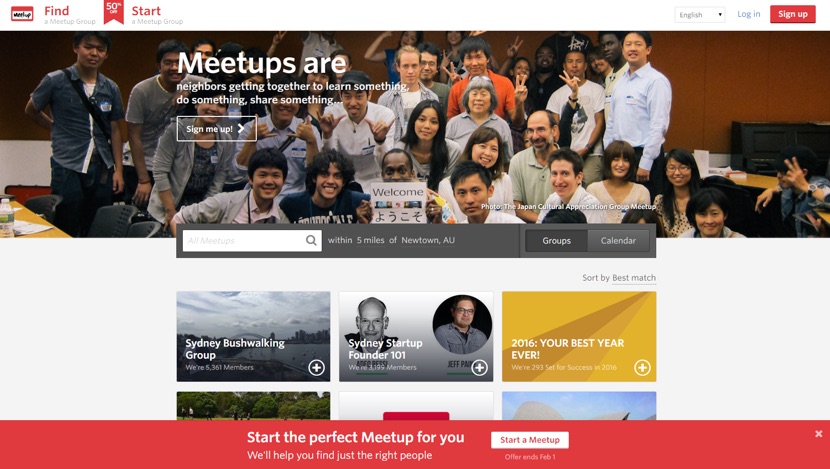
meetup-cta


When all you want to do is belong, click Meetup’s “Start a Meetup” call-to-action.


Aspirational Compulsion


Finally, studying attitudes about money, career, and material things can help you understand how a user may be motivated to part with their money to make a pain point go away, as well as what their end goals are in life. This assists with understanding what angle you need to take in order to get a user to believe they “need” your product. If you’re aware that your target audience is driven by the desire to excel in life, you’ll be able to create a CTA that reflects this, like “Make money now.”


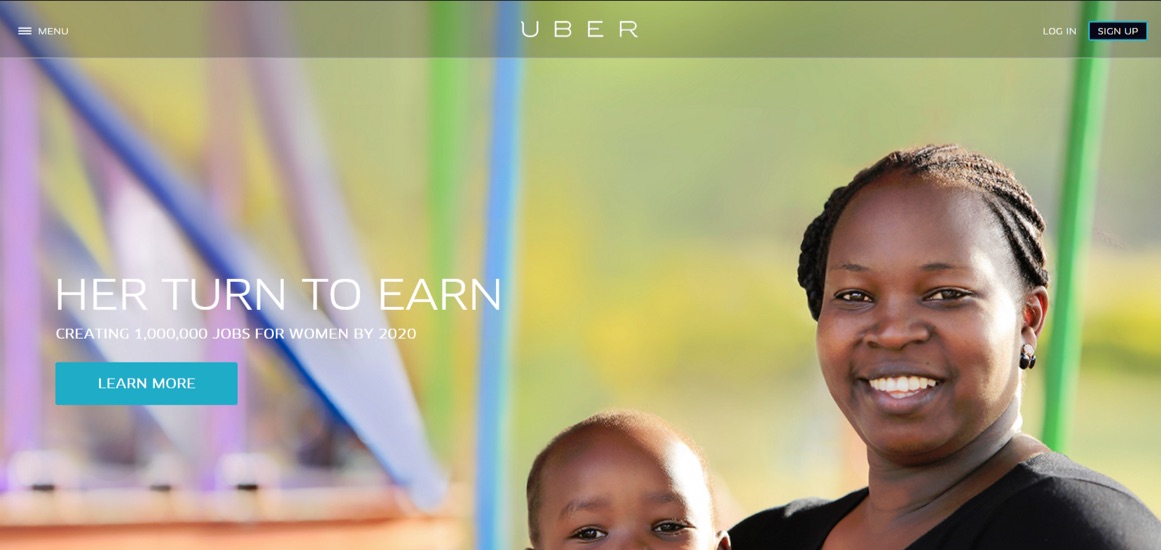
uber-earn-cta


By tying in the money aspect, Uber’s call-to-action attracts exactly the type of driver they want.


It’s also a good idea to provide an incentive for completing the survey. This method may be frowned upon by market research experts who argue that an incentive will skew results. But I’m of the belief that, with enough responses, those that are skewed positively or negatively will be outweighed by the respondent majority. SurveyMonkey has a great little guide to calculate how many responses you need for statistical confidence.


The incentive could be as simple as offering use of your product for free for the first year, or a substantial discount, or a limited early access. Alternatively, it could pay to supplement your survey with incentives of products or services that target the same market segment you do (for example, a free three-month trial of a non-competing and popular SaaS product).


The way to do this is to include an optional field at the end of the survey that asks for an email address and stipulates that the email will only be used to notify the person about their eligibility for your incentives.


Step 2: Find Your Market


Once you have your survey and incentives ready, it’s time to get your target audience to actually take your survey. Finding people to complete it can be hard. If your target audience is easy to locate physically, try going there and asking as many people as possible to take it. If you have contacts that are highly influential in your target market, try to leverage them.


Alternatively, you can always post your survey to an online medium that your target audience uses prolifically. Or, you can demographically and geographically target your audience through paid advertising.


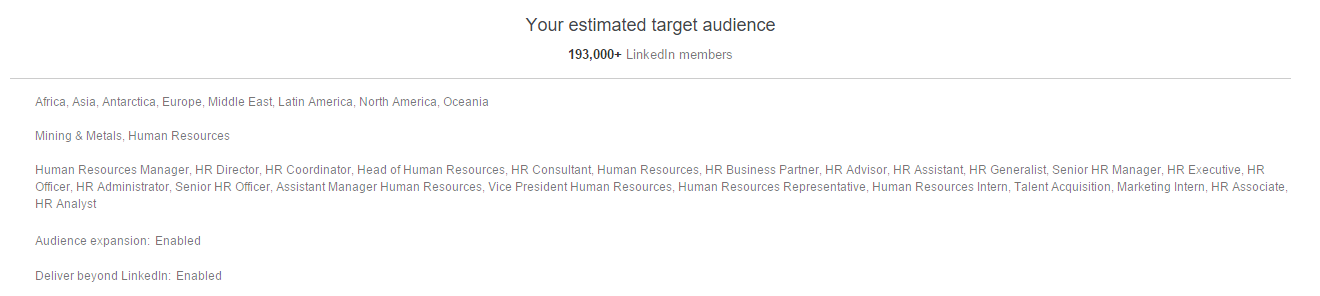
For example, we compiled a survey at GRONADE for a recruitment startup. Once the survey was ready to go, we sent it out to the founder’s existing database. We supplemented those responses using LinkedIn’s ad targeting system, targeting by job role, seniority, and geography, for better quality survey results.


linkedin-audience-targeting


Targeting the right audience for a survey using LinkedIn


Step 3: Supplement Your Data


When you’ve collected your responses and have an idea of what the general consensus is about the behavioral activity of your target audience, it helps to get extra context. A good idea is to take your target market criteria and search for census and journal research data that provides supplementary information about your target audience.


For example, if you’ve discovered that your dominant target market is entrepreneurs in Silicon Valley, it might be beneficial to also search for information about what they earn, how uncomfortable their living arrangements are, or even how well they do at mathematics (see page 45 of the 2015 Silicon Valley Index). This helps you build a complete profile of your audience and helps you make better decisions about what might motivate them to click your call-to-action.


compulsion-journal


Searching Google for related journals on the survey topic


With census data, you get a very particular insight into household, employment, financial, and cultural information. Some journals and other market research (which has been made public) might help you understand saturation data around device and app usage, and maybe even motivations for what makes a specific user set purchase.


Step 4: Create Hypotheses about Your Market


So now you have your collected your survey responses and supplementary data. This collection of knowledge about your potential user base is pretty powerful. With this information, you’re able to create hypotheses around what makes your audience “compulsive.”


In any particular demographic, you're not often going to have just one psychological profile, but many. Every person has a pretty unique cocktail of needs, wishes, and desires based on who they are, how they grew up, and what's on their mind.


Here are some example assumptions from previous research we performed at GRONADE. If we were to address a segment of Australian males aged 18 to 21, some common threads we could leverage are:


  • Isolation: They feel lonely and want to be closer or more connected to other people. It’s the same reason people do ecstasy (which promotes feelings of closeness) as a drug and use Facebook – it makes them feel as if they’re bonding, they have friends, and there’s some kind of common ground.

  • Boredom: Life doesn’t seem interesting. Their job is boring and nothing new is happening. They need to find something to keep themselves entertained. This is where the thrill of trying something dangerous, like drugs at a wild party or solo skydiving, comes in to play. It’s also the driver of many television successes like House of Cards and Breaking Bad because they can immerse themselves in something far more exciting as an escape. They live vicariously through television characters.

  • Distraction: Things aren't going well. There is a problem at work, at home, with relationships, or they just doesn't feel good about themselves. They feel anxious, stressed, or worried. Something offers a distraction, often one that numbs or soothes the pain or stress. They’ll use any means to distract and relax, such as scrolling through Instagram, instantly responding to snaps via Snapchat, or they'll smoke. It’s a way to deal with anxiety at the expense of productivity.

  • Lack of purpose/accomplishment: They feel they are not achieving anything and not getting anywhere. Some habits, like playing World of Warcraft, Call of Duty, or Angry Birds make people feel as if they’re really getting somewhere or making a difference (like saving lives and becoming a war hero) and that makes up for the fact that their real lives don’t offer much sense of accomplishment.


Most people aren't very aware of their own psychological needs. If you ask someone why they bought a Ferrari, they will say, "because I have always loved cars" not "because I feel unaccomplished and having an expensive car makes me feel important and powerful" (i.e., it's signaling my status).


You could guess at someone's inner needs through lots of clues (such as appearance, behavior, and purchasing habits). Someone who buys expensive brand name clothing might be giving a clue that they care a lot about looking important. Or, it might be a clue that they care a lot about fitting in, so they buy what all their friends are buying.


Step 5: Call-To-Action Logic


Brainstorm a list of words that come to mind when you assess the results you have. When you have a healthy list of around 10 to 20 words, use Thesaurus.com to expand the set of keywords to a list of action words you feel will have the greatest impact.


Compulsion-Thesaurus


Use a thesaurus for alternative keywords to impact assumption trigger words


Select five of your favorite, most evocative keywords to kick-start your initial A/B test batch of calls-to-action. This is a good start for your experiment to learn the most effective call-to-action to use.


The best approach to find a CTA that works is to tap in to the fears and attributes you uncovered in your research. If we use the commonalities I mentioned above for middle-class Australian men aged 18 to 21, we could assume the following five calls-to-action would be a good foundation group. Of course, these should be tailored to the actual product you’re offering, though in these examples, I’m representing the most obvious results based on the research:


  1. Be Together, Now (playing on the isolation aspect and the longing for connectedness)

  2. Your Thrills Await (a counter to the boredom aspect)

  3. Escape Today (a ticket away from the mundane)

  4. Make a Difference (a way to satisfy the desire for accomplishment)

  5. Take Control (a real power move in a world where sometimes all seems out of control)


Conclusion


At the end of the day, you still need a compelling offer. If your product sucks, no psychological trickery is going to vacuum fat stacks out of someone’s wallet.


Apple never says, "If you use Apple products, you're smart, creative, and stylish.” It’s just implied.


If you have something people will feel good about using or buying and you can create a compelling action-point for your core target audience to begin the journey and use your product, it’s a much stronger position to be in.


To do that, you need to become intimate with who your target audience really is, how they behave, what makes them feel compelled to take action, and then speak their language to engage their trigger finger. If you can do that enough times and can keep them happy, engaged, and converting repeatedly on specific business objectives, that is a sure-fire recipe for growth.


About the Author: Tomer Garzberg is the CEO and Founder at GRONADE Growth Partnerships. They grow seed- and venture-capital-funded startups and enterprise products. GRONADE is a blend of man and machine on a mission to systematize growth. Say Hi on Twitter @TomerGarzberg.


Wednesday, January 27, 2016

How to Decode The Connection Between Organic & Paid Content Promotion

Organic-and-paid-content-promotion


We often have new customers ask us what the best approach is for breaking the code of content promotion. Is it purely organic reach, social amplification or is paid promotion the way to go?


The short answer is, all of these and more.


When content marketing first hit the market, brands used it as an opportunity to follow a formula for something they already knew, online advertising. Banner ads, spam emails and other forms of advertising were a precursor to the more recognized forms that we see today. In the mid-nineties, brands were spending upwards of $11,000 a week for banner advertisements.


Much later, once brands began to understand the potential of content marketing as an actual way to build value and credibility (without spamming), marketing investments began to shift. Suddenly everyone was investing a large portion of their funds into creating quality content and advertising investments began to wane.


That brings us to today. Brands large and small have become savvy to the fact that quality content is a must. However, the competition for the attention of consumers is becoming increasingly difficult. The mere creation of top-notch content will no longer suffice.


To help you decode the proper mix of organic and paid content promotion to make your content reach new heights, consider the connections below.


Understanding your end objective is an essential step in determining what mix of organic and paid promotion you should pursue. For example, if your content is top of funnel and the goal is to get an influx of shares and view, you’ll likely want to invest the paid portion of your promotion in social boosting.


However, if you’ve developed a great middle or bottom of funnel content asset, then you can begin incorporating pay-per-click (PPC) and other forms of advertising to convert prospects that are ready to buy.


Your hub and spoke can include paid promotion. A traditional hub and spoke publishing model centers around a larger content asset and shows the different ways to drive traffic to that asset using earned, owned and some paid media. The next iteration of the hub and spoke might look something like this:


organic and paid hub and spoke publishing


Create and promote targeted content. First of all, your content should be optimized for the humans that you want to consume, share and act on the information, as well as the search engines that you want to crawl your content.


Additionally, there are both paid and organic methods to target your content promotion.


For example, your Facebook and Twitter profiles may have slightly different audiences. In order to target your organic message appropriately, you’ll want to use messaging, visuals and calls to action that make the most sense for that audience.


The targeting options available within search and social advertising platforms has grown leaps and bounds within the last few years. In addition to the capability of uploading actual lead lists, you can target everything from location and job title, down to the smallest detail about user habits, income and more.


Need Additional Help Decoding Organic & Paid Content Promotion?


Finding the exact right mix of organic and paid promotion for your content strategy doesn't happen overnight. It is process that includes testing, some investment and often, relying on the experts to help guide you. If you need help uncovering your biggest content marketing opportunities and finding ways to make it support your business objectives, contact us today.


Header image via Shutterstock


Email Newsletter
Gain a competitive advantage by subscribing to the
TopRank® Online Marketing Newsletter.


© Online Marketing Blog - TopRank®, 2016. |
How to Decode The Connection Between Organic & Paid Content Promotion | http://www.toprankblog.com

The post How to Decode The Connection Between Organic & Paid Content Promotion appeared first on Online Marketing Blog - TopRank®.