Wednesday, March 30, 2016

Moving Beyond Personalization: How 2 companies boosted opportunities by leveraging individualized marketing


As marketers, when we hear the term “personalization,” we've been conditioned to think “Hello [recipient name], I really looking forward to sharing with you some ways that [company name] can best serve you.”


Though these methods may have increased opens and clickthrough a decade ago, they are no longer capable of working magic on their own. In short, customers have figured us out.


At MarketingSherpa Summit 2016, numerous presenters took the stage to urge their fellow peers to switch their focus from gimmicky, one-sized-fits-all “personalization” to true individualization.


Two companies in particular, SCI Solutions and SAP North America, leveraged individualized marketing to significantly increase new opportunities.


Behavioral marketing from SCI Solutions


SCI Solutions, a Seattle-based company that offers software to hospitals and other medical facilities, is faced with an impossibly crowded marketplace. The contact information for every buyer is easily available, and opens rate across the industry are less than 1%. To combat this, Jeremy Mason, Director of Demand Generation, SCI Solutions, and his team combined the most effective aspects of persona-marketing and trigger-based marketing to create a truly individualized behavioral marketing plan.


The selection of every piece of content and the precise timing of its delivery was anchored by the team's knowledge of who the recipient was - based on industry standard databases, Data.com reports, LinkedIn research and his team's own internal data - and where they were in the customer journey.


For example, Jeremy's ideal prospect is the hospital CFO.


When targeting this particular buyer, Jeremy emphasized a slow building of trust over the course of months, as quantified by a custom lead scoring system that the SCI team created. Messaging may start with something as simple as an infographic. Two weeks later, the team would follow up with an ebook, or an article. Two weeks after that, CFO's would be sent an invitation to a pre-recorded webinar. Based on the actions the prospect took (and their specific persona), points were added to their score. When their score reached 50, they were considered hot, and the team would send an invitation to try a demo of SCI's software suit.


By leveraging this approach, SCI experienced a 132% increase in responses and 35% growth in opportunities.


While SCI solutions targeted specific personas, another tech-based company, SAP, built individualized marketing based on account.


SAP North America creates markets of one


Eric Martin, Vice President, Marketing, SAP North America, discussed this account-based marketing (ABM) approach during his presentation, “How SAP Engaged Its Best Customers With Account-Based Marketing (ABM) to Impact the Close of $27 Million.”


Due to the repeat nature of SAP's business, and the expansion opportunity that each account provides, every customer is crucial, with a handful of the most-important accounts driving up to 30% of SAP's total revenues.


Despite this, prior to the launch of the ABM program, SAP North America's marketing was generic and highly matrixed. During his presentation, Eric discussed a difficult phone call he received from one company asking to no longer be contacted by SAP at all due to the irrelevant nature of their communication.


To counteract this, Eric knew that he must start treating accounts as individualized markets of one. To test this new ABM approach, the SAP team chose five key accounts from their list of strategic customers for use in the pilot program. These accounts were hand-selected due to their growth potential, engagement with sales and perceived commitment to SAP.


Extensive research was then conducted on each account. The team talked to customers to determine their vision, their goals and their ideal audience. They identified growth targets, and how software contributed to those goals. Only then did they plan the highly-focused, executional elements of the campaign.


By focusing on individualization, SAP North America saw a $27 million increase in new pipeline opportunities.


As marketers, it's vital that we remember that our prospects are people, not cells on a spreadsheet. By taking the time to figure out what makes each prospect or segment tick - spoiler: it's not simply seeing their name in a subject line - we maximize our opportunities to build real, meaningful relationships.


You can follow Ken Bowen, Managing Editor of MarketingExperiments, MECLABS Institute, on Twitter at @KenBowenJax.


You might also like


Live From MarketingSherpa Summit 2016: Humana on the power of iterative testing


Email Messaging Online Course [From MECLABS, our parent research organization]


6 Examples of Lead Nurturing Campaigns

Sometimes our impression of marketing tactics is more monolithic than the reality. Setting up a lead nurturing campaign in your marketing automation platform is usually about contacting prospects early in their journey and building a relationship with them as they come closer to purchase.


The expectation is that we learn more about our prospects through their actions, which lets marketers provide content that is more in line with their interests and expectations. Nurture means to care for, and a good nurture campaign can show that you care about prospects.


Nurture campaigns can actually serve different audiences with different goals, provided you set them up to maintain contact with the right profiles. The six examples below follow along as prospects become more connected to your company and the buying process, and ultimately become customers.


1. Welcome Campaign

It is a good practice to welcome new subscribers with a simple campaign. You can introduce the brand and let them know the benefits of subscribing to your list. You can also let them know what they can expect as next steps. Think of this as the top of your nurture funnel. Prospects have signed up for a list, or responded to an offer, and now it is up to you to learn more about them so they can opt-in to something else. That could be another offer or a more specific list. Again, this nurture is about learning more about them.


2. Education Campaign

This is a pretty standard nurture campaign and what most of us think about when we think about nurtures. The goal is to get the prospect ready to talk to sales. You need to engage prospects to learn more about them, while at the same time educate them about your products or services. Your value proposition can start to play a role here. Sharing relevant, educational content is the heart of this campaign. You can build this relationship by providing value.


3. Why Us Campaign

As you learn more about your prospects and their needs, you want to start making the case for how your solution can support those needs. Competitive differentiation points are a big part of this kind of nurture campaign. You want to reiterate your value proposition to make sure they understand “why us.” Case studies and testimonials are the perfect content to make these points for you.


4. Accelerate Campaign

As prospects continue to move through the buyer's process/journey/path, you reach a point where the process slows down. You can create a nurture campaign that removes roadblocks and can speed the purchase decision. These are the kinds of campaigns that need to be set up in conjunction with sales, as you want to make sure efforts are coordinated. Decision tools like ROI calculators are the kinds of things you want to send in this campaign.


You should have lots of information in a prospect's profile by this point, so you should have good sense of the resources that can help move this along. Maybe they keep going to the pricing page, or the support page. You want to help prospects get comfortable with their decision.


5 .New Customer Onboarding Campaign

An often-overlooked use of nurture campaigns is the ability to manage your customer onboarding. Welcome your new customers and thank them for their decision. No matter the type of product or service you offer, there is an identified path to success in onboarding. Provide these steps in a series of email. You can also provide answers to commonly asked questions and support options.


6. Customer Loyalty or Retention Campaign

Once you have a customer, you want to keep them happy. Set up an ongoing nurture campaign to support their retention. While you do want to continue to reiterate the benefits of their purchase, but you also still want to provide tips and tricks so they can continue to get the most out of your products or services. By running this campaign through your marketing automation platform, you have the ability to capture more activity data than you would otherwise. This could help alert you to a lack of activity that indicates they are an at risk customer.


These basic campaigns can help you think about how nurturing can be expanded beyond the simple “move them to sales” campaign. For lots more details, download our Lead Nurturing Guide.


Moving Beyond Personalization: How 2 companies boosted opportunities by leveraging individualized marketing


As marketers, when we hear the term “personalization,” we've been conditioned to think “Hello [recipient name], I really looking forward to sharing with you some ways that [company name] can best serve you.”


Though these methods may have increased opens and clickthrough a decade ago, they are no longer capable of working magic on their own. In short, customers have figured us out.


At MarketingSherpa Summit 2016, numerous presenters took the stage to urge their fellow peers to switch their focus from gimmicky, one-sized-fits-all “personalization” to true individualization.


Two companies in particular, SCI Solutions and SAP North America, leveraged individualized marketing to significantly increase new opportunities.


Behavioral marketing from SCI Solutions


SCI Solutions, a Seattle-based company that offers software to hospitals and other medical facilities, is faced with an impossibly crowded marketplace. The contact information for every buyer is easily available, and opens rate across the industry are less than 1%. To combat this, Jeremy Mason, Director of Demand Generation, SCI Solutions, and his team combined the most effective aspects of persona-marketing and trigger-based marketing to create a truly individualized behavioral marketing plan.


The selection of every piece of content and the precise timing of its delivery was anchored by the team's knowledge of who the recipient was - based on industry standard databases, Data.com reports, LinkedIn research and his team's own internal data - and where they were in the customer journey.


For example, Jeremy's ideal prospect is the hospital CFO.


When targeting this particular buyer, Jeremy emphasized a slow building of trust over the course of months, as quantified by a custom lead scoring system that the SCI team created. Messaging may start with something as simple as an infographic. Two weeks later, the team would follow up with an ebook, or an article. Two weeks after that, CFO's would be sent an invitation to a pre-recorded webinar. Based on the actions the prospect took (and their specific persona), points were added to their score. When their score reached 50, they were considered hot, and the team would send an invitation to try a demo of SCI's software suit.


By leveraging this approach, SCI experienced a 132% increase in responses and 35% growth in opportunities.


While SCI solutions targeted specific personas, another tech-based company, SAP, built individualized marketing based on account.


SAP North America creates markets of one


Eric Martin, Vice President, Marketing, SAP North America, discussed this account-based marketing (ABM) approach during his presentation, “How SAP Engaged Its Best Customers With Account-Based Marketing (ABM) to Impact the Close of $27 Million.”


Due to the repeat nature of SAP's business, and the expansion opportunity that each account provides, every customer is crucial, with a handful of the most-important accounts driving up to 30% of SAP's total revenues.


Despite this, prior to the launch of the ABM program, SAP North America's marketing was generic and highly matrixed. During his presentation, Eric discussed a difficult phone call he received from one company asking to no longer be contacted by SAP at all due to the irrelevant nature of their communication.


To counteract this, Eric knew that he must start treating accounts as individualized markets of one. To test this new ABM approach, the SAP team chose five key accounts from their list of strategic customers for use in the pilot program. These accounts were hand-selected due to their growth potential, engagement with sales and perceived commitment to SAP.


Extensive research was then conducted on each account. The team talked to customers to determine their vision, their goals and their ideal audience. They identified growth targets, and how software contributed to those goals. Only then did they plan the highly-focused, executional elements of the campaign.


By focusing on individualization, SAP North America saw a $27 million increase in new pipeline opportunities.


As marketers, it's vital that we remember that our prospects are people, not cells on a spreadsheet. By taking the time to figure out what makes each prospect or segment tick - spoiler: it's not simply seeing their name in a subject line - we maximize our opportunities to build real, meaningful relationships.


You can follow Ken Bowen, Managing Editor of MarketingExperiments, MECLABS Institute, on Twitter at @KenBowenJax.


You might also like


Live From MarketingSherpa Summit 2016: Humana on the power of iterative testing


Email Messaging Online Course [From MECLABS, our parent research organization]


29 Essential Content Marketing Metrics [INFOGRAPHIC]

It took me a while to figure out the one significant difference between being a writer and being a content marketer. But that one, teeny-tiny difference is actually huge. In fact, it may very well be the key to a successful content marketing strategy.


Spoiler alert: it's data.


A true content marketer knows not only how to hook you with carefully crafted prose, but also how to measure the success of said prose and then iterate on it.


But figuring out what to measure can be tricky. Which is why we're sharing with you 29 Essential Content Marketing Metrics, a brilliantly designed infographic by content marketing and curation software Curata.


Have anything to add? Let us know in the comments!


metrics infographic

Embed this infographic on your site


6 Examples of Lead Nurturing Campaigns

Sometimes our impression of marketing tactics is more monolithic than the reality. Setting up a lead nurturing campaign in your marketing automation platform is usually about contacting prospects early in their journey and building a relationship with them as they come closer to purchase.


The expectation is that we learn more about our prospects through their actions, which lets marketers provide content that is more in line with their interests and expectations. Nurture means to care for, and a good nurture campaign can show that you care about prospects.


Nurture campaigns can actually serve different audiences with different goals, provided you set them up to maintain contact with the right profiles. The six examples below follow along as prospects become more connected to your company and the buying process, and ultimately become customers.


1. Welcome Campaign

It is a good practice to welcome new subscribers with a simple campaign. You can introduce the brand and let them know the benefits of subscribing to your list. You can also let them know what they can expect as next steps. Think of this as the top of your nurture funnel. Prospects have signed up for a list, or responded to an offer, and now it is up to you to learn more about them so they can opt-in to something else. That could be another offer or a more specific list. Again, this nurture is about learning more about them.


2. Education Campaign

This is a pretty standard nurture campaign and what most of us think about when we think about nurtures. The goal is to get the prospect ready to talk to sales. You need to engage prospects to learn more about them, while at the same time educate them about your products or services. Your value proposition can start to play a role here. Sharing relevant, educational content is the heart of this campaign. You can build this relationship by providing value.


3. Why Us Campaign

As you learn more about your prospects and their needs, you want to start making the case for how your solution can support those needs. Competitive differentiation points are a big part of this kind of nurture campaign. You want to reiterate your value proposition to make sure they understand “why us.” Case studies and testimonials are the perfect content to make these points for you.


4. Accelerate Campaign

As prospects continue to move through the buyer's process/journey/path, you reach a point where the process slows down. You can create a nurture campaign that removes roadblocks and can speed the purchase decision. These are the kinds of campaigns that need to be set up in conjunction with sales, as you want to make sure efforts are coordinated. Decision tools like ROI calculators are the kinds of things you want to send in this campaign.


You should have lots of information in a prospect's profile by this point, so you should have good sense of the resources that can help move this along. Maybe they keep going to the pricing page, or the support page. You want to help prospects get comfortable with their decision.


5 .New Customer Onboarding Campaign

An often-overlooked use of nurture campaigns is the ability to manage your customer onboarding. Welcome your new customers and thank them for their decision. No matter the type of product or service you offer, there is an identified path to success in onboarding. Provide these steps in a series of email. You can also provide answers to commonly asked questions and support options.


6. Customer Loyalty or Retention Campaign

Once you have a customer, you want to keep them happy. Set up an ongoing nurture campaign to support their retention. While you do want to continue to reiterate the benefits of their purchase, but you also still want to provide tips and tricks so they can continue to get the most out of your products or services. By running this campaign through your marketing automation platform, you have the ability to capture more activity data than you would otherwise. This could help alert you to a lack of activity that indicates they are an at risk customer.


These basic campaigns can help you think about how nurturing can be expanded beyond the simple “move them to sales” campaign. For lots more details, download our Lead Nurturing Guide.


How to Idiot Proof Your Ad Campaigns

Marketing promotion sucks when you treat people the same.


That goes for conversions, and it goes for advertising too.


But the minute things start to go awry, people start messing with their landing page headline or ad descriptions.


As if those tiny, miniscule elements are the primary reason traffic's not comin' or visits aren't convertin'.


The best landing page, optimized 100% correctly, can't make up for the wrong audience seeing that message.


Ad campaigns are already difficult. But the good news is that you don't need to possess ninja PPC skillz.


Instead, here is a dead simple way you can isolate where problem areas might pop up and stop them dead in their tracks.


When 'Best Practices' are Good Enough


Commonly accepted best practices are a starting point. The tip of a metaphorical iceberg.


They get all the attention and ink online. But there's a mountain below just waiting to sink your campaign.


On a GREAT day, landing pages convert around 10% of visitors (and those are the 'uncommon', special ones that vastly outperform all the rest). That means the majority of page visitors are doing, well, anything else besides converting.


Slapping on a different ad-description isn't going to budge that number. It won't change the fact that those people simply aren't ready to buy. It might get you from 6-7%. Which is great!


But in a world where over 50% of all customers interactions follow a 'multi-event, multi-channel' journey that takes various touch points prior to converting, we should look beyond tactical 'best practices' to make sure the entire funnel aligns to deliver the best conversions for our buck.


Managing the growing complexity is a top priority for marketers, with most juggling anywhere from 5 – 31 separate tools to manage messaging in a multi-channel marketing environment.


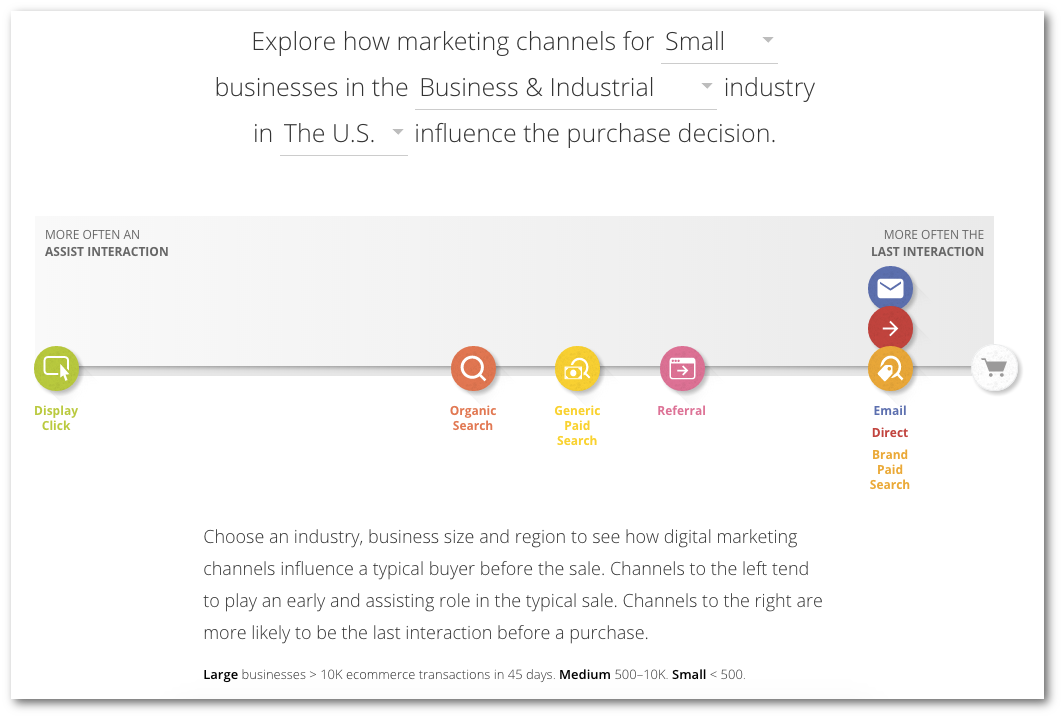
This can be best illustrated with the help of Google's Customer Journey to Online Purchase, which shows how a typical customer's journey might look (including which channels influence which parts) for most industries. Yay visuals!


journey-to-online-purchase-google


The point is, there are many things involved in a single conversion. Whether we're talking about a product purchased or lead generated.


Unfortunately, ad campaigns today can't be simple, static paths from New Visitor -> Conversion. Not in a world where it takes a minimum of 6-8 customer touch points prior to conversion. Or when your most profitable customers are NOT the ones who visit your site 1-3 times, but 14-20 before signing up.


Today's ad campaigns are more like a delicate system of variables that depend on each other for success. (Enter your best 'synergistic' MBA speak here.)


Making sure those things come together harmoniously is the best way to boost conversion rates for the long-term.


Here's how.


1. Create Different Ad Campaigns for Each Customer Journey Stage


Ad campaigns should align with an appropriate stage of the sales funnel. Same as any inbound deliverable like an infographic, offline tradeshow, or other campaign.


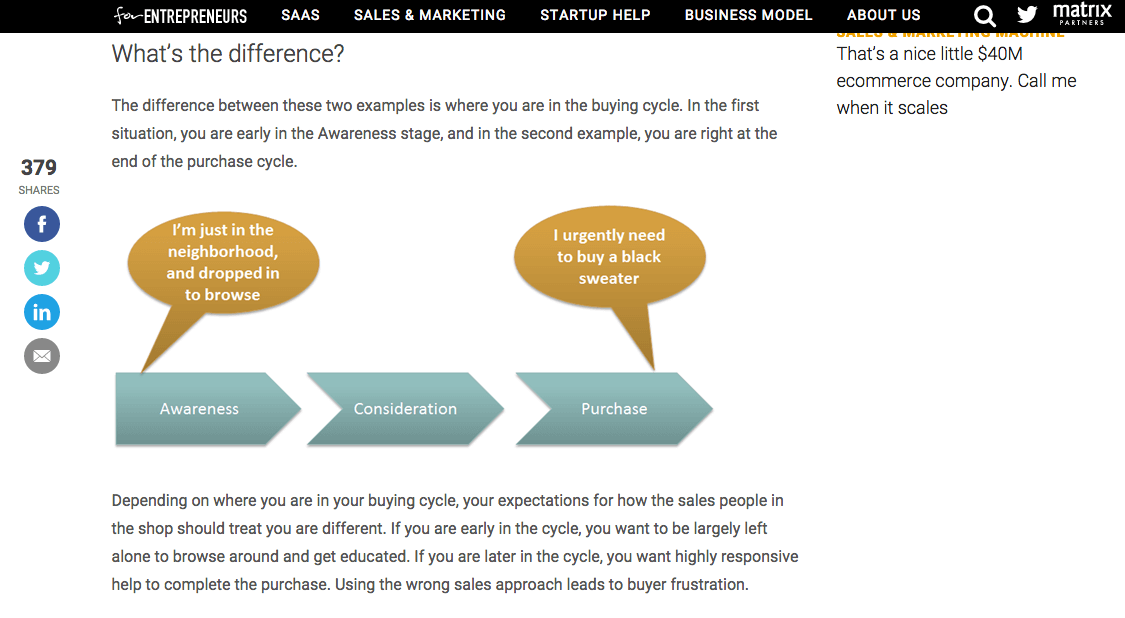
You know, that whole Awareness, Consideration, Decision bit?


(If you have NO idea what I'm talking about, read about the buying cycle and triggers from David Skok. And then spend another 20 minutes reading everything else he writes – it's worth it.)


buying-cycles-for-entrepreneurs


Ad channels (and even different campaigns on the same channel) can then be used for different purposes, whether that's driving new sales to generating leads or simply boosting awareness. The opportunities are vast, but the execution needs to be precise.


ad-channels-sales-lead-awareness-distribution


Let's start with generating initial awareness to see how this works.


Demand Generation


The goal here is to bring in new, targeted visitors. Obviously.


Problem? Nobody knows who you are. And frankly, they don't really care. They haven't yet become aware that they have a need for you yet.


So help them. Literally.


Start with their daily life. What issues pop up, take too long, or cause them frustration (that can also possibly tie back into your widgets)?


Listen:


Consumers ignore 86% of display ads. And those average banner ad click through rates are a dismal 0.1%. It ain't easy out there.


Botching this jeopardizes everything else. So your value proposition needs to be awesome. Not good, or great. But, “Holy s$*% I need to [click this link / read this post] right now”.


Typical display ads, AdWords, and Facebook are well tread options. So let's look at new, fresh examples like Twitter and Instagram. Less competition typically = less expensive = higher return on ad spend. And the principles are the same, regardless of channel.


For example, let's say you're trying to get the attention on Twitter. Instead of simply promoting your account (and making it all about you), solving a huge pain point or even providing a fun distraction can be enough to start introducing your brand to consumers.


verizon-twitter-ad-star-wars


The best social ads at this stage also 'blend' in with the content people are already consuming. You know, like that whole native advertising thing. For example, this one from I.D. Sarrieri is very Instagram-ish – selling a mood or theme featuring their products.


idsarrieri-instagram-ad


Find this one, and many more great Instagram ad examples here.


Last but certainly not least, is your headline.


The best headlines are a crystallized version of your value proposition, and they tap into some deeper primal motivation to grab maximum attention. Bnonn's SHINE headline formula is a great way to get started, giving you the 'essential' ingredients like Specificity and Immediacy that are critical to getting people to take action.


You can also study the masters like BuzzFeed, who crank out brilliant headlines day-after-day that can be templated for re-using later. For example:


buzzfeed-headline-article


This one might look like:


  • # + [Perfect Adjective] + [Noun/Keyphrase Solution] + [To/For/Like] + [Fix Your Undesirable Thing]


Lead Generation


Once you've captured attention, the next step is to get them interested.


You do that by constructing a 'bridge' between their problems or pain points, and your widget which can ultimately solve those things for them.


One of the most popular techniques here is some kind of 'lead magnet' to generate a micro-conversion like a basic email address. Chances are, you're familiar with all the usual suspects like eBooks, webinars, checklists, and more.


But 'content' based offers can mean much more.


For example, most designers are starved for stock photos, especially with the exorbitant costs at the well known sources.


Here, Bigstock is providing 35 free!


bigstock-free-photos-twitter-ad


(Here are a few more Twitter ad examples to browse for inspiration.)


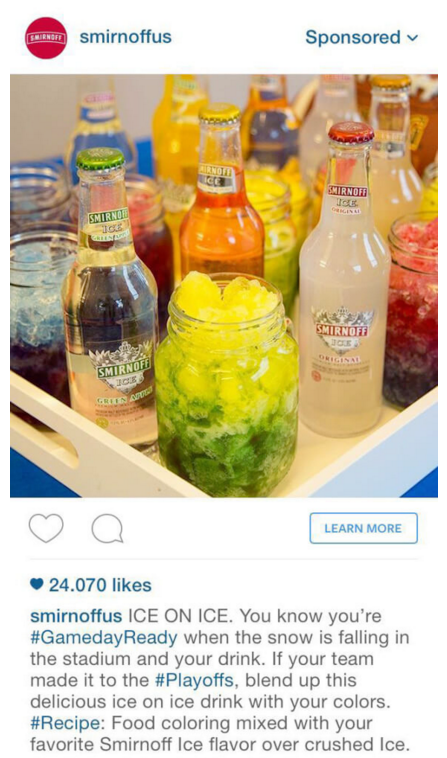
Even something as simple as a recipe could work wonders because it blends (pun intended) an offer to get attention with the products they'll need (and can purchase from you).


Smirnoff's example below is a perfect example of bridging the gap between those two worlds.


smirnoffus-instagram-ad


Closing Customers


By this point, prospects should know who you are and at least have some interest in your product.


Otherwise, we run into that original problem of trying to convert cold, unaware leads (which all of the best tactical practices in the world can't help).


The key? Make them an offer they can't refuse. Especially if switching costs are an issue.


For example, MailChimp executes brilliantly by running a competitive offer to Constant Contact peeps with a free three month offer. That should help soften the blow of having to move all email templates and contact records, while also giving those people enough time to settle in with the service.


mailchimp-3-months-free-twitter-ad


(The actual content and CTA looks a little sloppy, but the overall offer is great.)


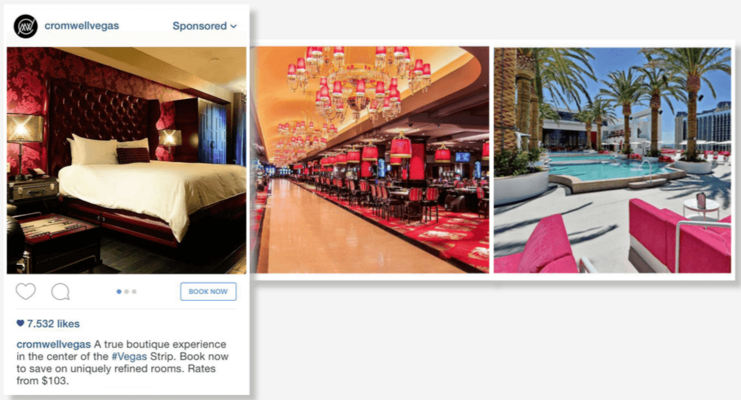
Admittedly, selling on Instagram is a, well, tough sell. It's still early days, and the channel is mostly known for brand awareness.


But still, the Cromwell in Las Vegas does as good a job as any, highlighting their attractive property in a multi-ad set with an appropriate CTA.


cromwellvegas-instagram


If you've done all the hard work up to this point (like getting awareness, building interest, and developing trust), the sales offer should be simple and straightforward.


A great offer or promotion can help, but shouldn't be required to get people to open up their wallets.


But if it is still difficult or damn near impossible, this next section can help.


2. Pinpoint & Upgrade Underperforming Stages


Creating different ad campaigns for specific sales funnel stages can help illustrate potential gaps, making it easier to break down exactly where you're excelling (or falling short).


That way instead of overreacting and making rash conclusions, you can start measuring those micro-conversions between stages or steps to find leading indicators of success.


For example, experiencing low sales but demand seems to be there? Insert more lead gen and nurturing campaigns into the mix to bridge that gap. The end result, should resemble a complete 'customer journey' that seamlessly moves people from one step to the next.


customer-journey-brand


But what if those things check out, and still nothing. You've got ad campaigns targeting each step, and they seem to be performing well. Except for that whole sales thing.


Break your ad campaigns down even further into the individual variables that dictate success.


Google AdWord's Quality Score is kinda the gold standard for using algorithms to award and set pricing in an auction based ad system. Facebook has also been testing different algorithms that act similarly.


What's unique, is that these algorithms use factors like ad relevancy from the ads you're running, to the keyphrases or audiences, and even through the landing pages. They factor all of these details, and then create a holistic score that dictates (a) how often your ads show and (b) what you're going to pay.


Algorithms like these force advertisers to consider how every single ad campaign element works together to produce the best ROI (instead of simply focusing on the single ad creative you're working on).


So let's start with the tactics, and work backwards to see if we can get any quick wins.


offer-to-landing-page-stages


Addressing or changing elements like the ad creative and landing page are far easier than ripping up the offer and starting from scratch. You can A/B test these elements according to commonly accepted best practices (which take all of 5 minutes Googling).


And it's the easiest, 'low hanging fruit' to quickly improve your Quality Score (or similar relevancy scores in other social ad platforms) that deliver fast results.


If issues still persist, take another step back to address the audience you're targeting (or keyphrases in AdWords which inherently have a certain type of audience searching). Chances are, improving audience targeting could give you that breakthrough.


For example, custom audiences on Facebook help you get more specific by targeting segments of past customers, retargeting website visits, or even the individual product page visited. Target saw a “20% increase in conversion [using Facebook's Dynamic Product Ads] compared to other Facebook ads”, according to Senior Vice President Kristi Argyilan.


Assuming your offer or value proposition is sound and that the channel is appropriate, iterating on the audience, ad creative, and landing pages should deliver something at the end of the day.


Otherwise, you have bigger issues (beyond advertising) that are holding you back.


Conclusion


The tactical best practices you read about all over the interwebs are important.


But only to a point.


Breaking things down by sales funnel stages can help you determine where you're excelling or falling short in key categories. They alert you to gaps in the customer journey that can cause breakdowns in driving new sales.


Once that's completed, you can get even more granular by looking at each independent variable within a single ad campaign to see where further bottlenecks are choking results. Working backwards from the ad creative and landing pages to your audience will give your campaigns a quick lift (assuming your offer or value proposition + channel selection check out).


Big conversion increases don't happen overnight by swapping out your headline or button color. They come from iterating on these tiny details along the way, making small improvements at each little step.


And best of all, isolating different variables helps assign priority, keeping execution focused and simple in an increasingly complex world.


About the Author: Brad Smith is a founding partner at Codeless Interactive, a digital agency specializing in creating personalized customer experiences. Brad's blog also features more marketing thoughts, opinions and the occasional insight.


4 Indirect Ways to Improve Your Search Rankings

rocket


I know you want it…


More organic search traffic.


Who doesn't want free, high quality traffic, that comes in month after month?


That's why SEO is such a big deal and one of the main topics I focus on-here, on Quick Sprout.


I believe that most marketers should be dedicating a significant portion of their time and resources towards SEO.


There are many things you can do that have a direct impact on your search traffic.


However, there is more to marketing than just SEO, and you probably know that.


The thing is, they don't have to be mutually exclusive.


Just because some of your marketing isn't specifically done to improve search traffic, that doesn't mean that it can't.


And this type of situation is more common than you might think.


In this post, I'll go over four ways that can indirectly improve your search rankings.


This means that the primary benefit of these marketing techniques is not to improve search traffic, but there's a good chance that, if done right, they might help you with your search traffic too. 


1. Following up with customers leads to extra benefits


This is a great place to start because there doesn't seem to be an obvious connection to SEO.


But I assure you there is.


Getting feedback from your customers is always a great idea, but it can eat up a lot of time.


Some businesses figure they don't have the resources to follow up continuously with customers and would rather dedicate them all to sales/marketing channels such as SEO.


However, if you get customer feedback and use it correctly, it can lead to some great backlinks in a few different ways.


Here's the simple 2-step process you'll need to follow:


Step #1 – Contact customers immediately after the sale: You have very few opportunities to open up communication with customers without annoying them.


After the sale is one of them.


Once someone purchases something from you, they're usually excited to hear from you and possibly want reassurance that everything went well.


Send them an email that confirms their order and lets them know whom to contact if they need help.


Step #2 – Follow up after they've had time to use your product: The more important part, when it comes to potential SEO benefits, is to follow up with customers again.


Once they've used the product, they can tell you if they've had any problems or complaints. This is the main reason why you'd want to follow up-these issues are important to address if you want to retain happy customers.


In addition, ask for their feedback on their experience.


If someone says that they're thrilled, that's great. Then you should ask them to share their experience with others. Since they enjoyed your product or service so much, you'll get a high percentage of these customers willing to help you out.


You have a few options that can help with SEO.


If you'd like to ask for a simple favor, ask them to leave a review on a big review site in your niche. For most niches, this will include sites such as Yelp and Yellow Pages.


Let's look at an example of a search for a carpenter in New York:


image07


The top result is a Yelp business page, while the second result is Yelp's internal search results for carpenters (another search listings page).


The second is most interesting here:


image09


This page orders businesses based on several factors, e.g., the number of reviews they have and how positive the reviews are (in addition to price).


As long as you fall into the default filters, the more good reviews you have, the higher your profile will appear.


Why does this matter for SEO?


Because the more prominent (higher) a link is on a page, the more weight it has.


This page has a lot of search engine authority (that's why it can rank at #2), and it passes that authority mostly to the top profiles that it links to.


Those profiles all have links back to their corresponding websites, which, of course, improves those websites' search authority.


Not only will reviews get you more direct business on these review sites, but that extra link power can help your rankings in search engines. Not by a ton, but by enough that you will notice it after a while.


The second option, which is best for high priced products, is to create a case study of the results your customer got.


Brian Dean at Backlinko does it all the time, both for his readers and actual customers:


image13


Case studies are typically really easy to promote, and they can get a ton of traffic and links.


I've created an extensive guide to creating effective case studies that you should read if you take this approach.


2. Get out of your shell and go to events


Just about every industry has several conferences throughout the year. No doubt you can find a few local events to attend if you wanted to.


Now, conferences can be a huge waste of time, but they can also be incredibly valuable.


Obviously, you go primarily to learn, but a huge secondary result can be the relationships you come back with.


Events are a great way to meet other people in your industry and explore opportunities to work together.


But guess what else happens?


When you email them down the line, asking them to check out your latest piece of content, most will be happy to read it and give feedback.


What's even better is that if they have a chance to link to it within their own content, they usually do. These links can have a big impact on your search rankings if you make several connections per event.


Finally, even if your connections don't manage their content, they can introduce you to the content manager for their business. You can explore collaboration opportunities or offer to create guest posts for them (which will give you more links to your site).


All of these potential benefits are important if you have to convince your boss that it's worth sending you to conferences.


Finding conferences is easy: I won't spend much time on this, but I'll show you quickly how to find conferences.


Start by Googling:


(industry) conferences (year)


You could also try “events” instead of conferences:


image03


Typically, you'll find a roundup of all the best events, often multiple.


Each of these results will give you a listing of events, separated by date, location, and audience:


image14


I recommend going through more than one list so that you don't miss any good ones.


Remember that conferences can be either worthless or extremely valuable. The difference depends on how you spend your time at them.


That's why I wrote the Beginner's Guide to Conferences in the past. Give it a quick read.


3. Hire the best help you can get


If you're truly creating “epic” content, chances are that you're not doing everything on your own.


In most cases, you're hiring freelance writers and designers to help fill in any gaps in your skillset.


Obviously, if you're hiring the best freelancers you can afford, it's because you primarily want to create great content.


That kind of content is the easiest to get to rank.


However, the very act of hiring freelancers will make it easier.


Let me explain…


Type #1 – Writers: Whether you hire a freelancer or offer them an attractive opportunity to collaborate, these relationships will often get you some extra high-quality backlinks.


A good set of examples are my ultimate guides (sidebar of Quick Sprout). For these guides, I teamed up with experts in each of the subjects.


I had some help from Kathryn Aragon writing The Advanced Guide to Content Marketing, for example:


image05


When someone helps create a piece of content of that quality, they, of course, want to show it off.


How?


By talking about it and linking to it.


It makes them look great to say they wrote or co-wrote an amazing piece of content.


Because of this, I didn't have to ask Kathryn to link to the guide; she's mentioned it dozens of times in her posts on other sites and social media (linking to it most of the time):


image10


Essentially, your writer will help you with the content promotion.


Type #2 – Designers: More commonly, marketers hire freelance designers to help create images for content.


The exact same principle applies here:


If you hire a freelancer to create something great, they will want to show it off in their portfolio, leading to great backlinks for your content.


Continuing with the example of my guides, I needed professional help to design them.


My designer had accounts on sites such as Behance and Dribbble, both of which are authoritative sites in the design niche.


Of course, they shared the images with links to those guides:


image00


Those links are the indirect benefit of working with great freelancers.


4. User experience optimization is a great use of your time


Creating a great user experience on your site and with your products is valuable for many reasons.


Typically, the main motivation for working on improving your users' experience has to do with the conversion rate. It's a good reason.


What most don't consider is that this often inadvertently plays a big role in improving search rankings.


There are a few reasons why, but most applicable here is the concept of pogo sticking.


image02


Basically, if a Google user clicks on your page but then goes right back to the search results for another, it indicates to Google that your content didn't satisfy the user.


Conversely, if most users stop on your page, you did a good job and are rewarded with better search rankings.


If you improve the user experience of your website, you'll usually end up increasing the number of visitors that you fully satisfy, decreasing pogo sticking. This can indirectly improve your rankings.


User experience is extremely complicated, but there are three common factors we can focus on and look at the ways they affect pogo sticking.


Factor #1 – page load speed: Studies have shown that people will not wait for pages to load.


image08


Even a fraction of a second can affect 5-10% of people who will leave before they even see your content.


Ideally, you want your pages to load in less than 2 seconds.


You can test page load speed by using the Quick Sprout tool or a tool such as GTmetrix.


image12


Improving page load speed will have a huge effect on pogo sticking, but it's also a direct ranking factor confirmed by Google.


It's not a huge one, but factoring both of these aspects together, speed can make a big difference in rankings.


Searchmetrics found a huge correlation between a quick load time and the top Google positions:


image06


Factor #2 – clutter: One thing that makes a big difference in user experience is the amount of clutter on the page.


Most people are looking for one specific thing, so everything that's unrelated on the page only serves as a distraction.


image01


Compare that to a site like Medium, where the content is essentially the only thing on the page:


image11


It's no surprise that Medium posts rank well in Google. When a user clicks through, they easily find exactly what they're looking for, leading to less pogo sticking.


Try to declutter your layouts as much as possible, taking out anything that your visitors don't need to see.


Factor #3 – site architecture: Site architecture refers to the way all the different pages of your website are organized in relation to each other.


For our purposes, good site architecture essentially means you have organized internal linking.


Here's what a good structure looks like:


image04


Everything is organized into topical silos.


When search engines crawl the site, it will be easier for them to determine the relevancy of your pages, which often leads to better rankings.


Conclusion


By all means, you should spend a lot of time and resources directly on SEO.


However, you can still focus on other areas of your business while also getting SEO benefits.


I've shown you four great business practices that accomplish valuable things plus give you indirect improvements to your search rankings.


I encourage you to incorporate as many of these as you can, without fearing that you're neglecting your SEO work.


If you have any questions about the subject of this post, let me know in a comment below.